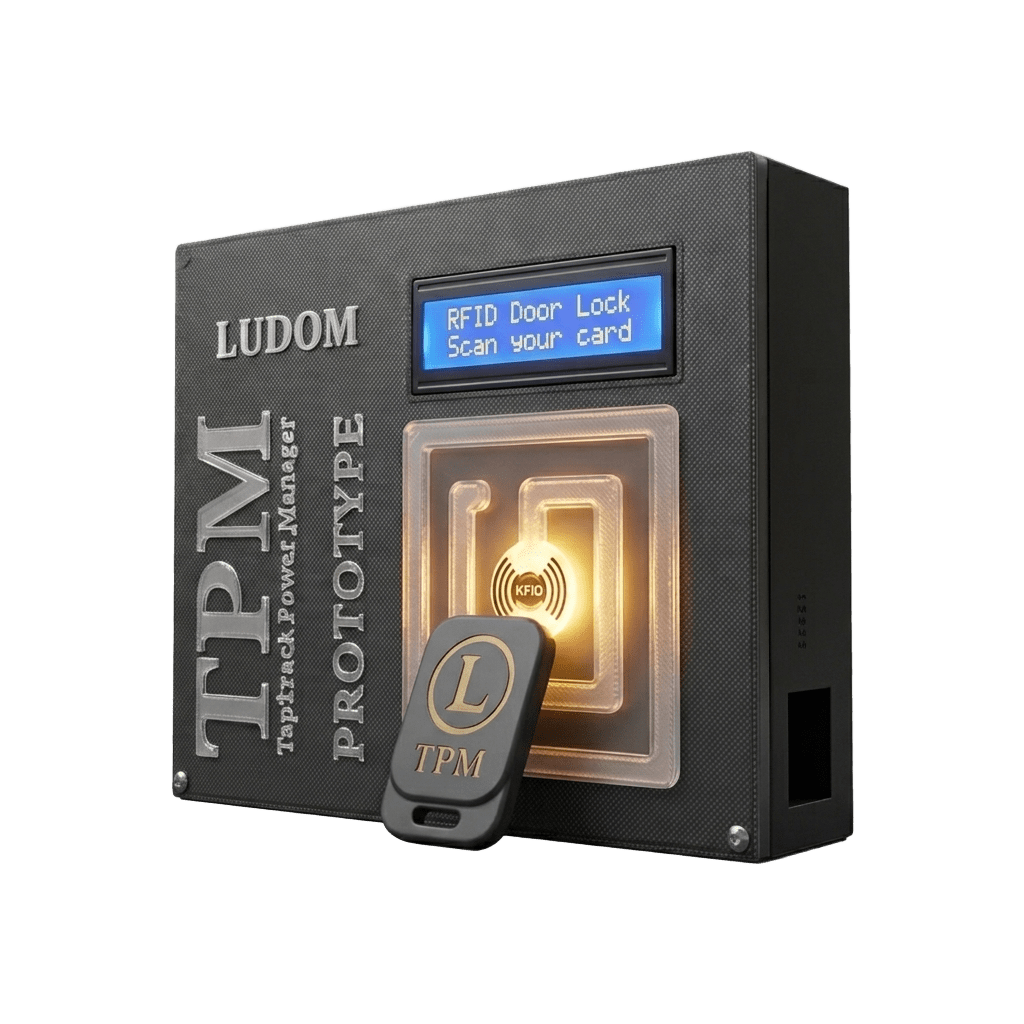
TPM · Total Platform Management
One device. Multiple possibilities.
TPM connects intelligent hardware with a unified platform for attendance, access control, power management, security, and automation — all managed from one application.
- Modules
- Attendance · Access · Power
- Devices
- One unit, many roles
- Management
- One platform
 Online
TPM App · Main Office
One device. Multiple modules. One platform.
Connect your physical world to one intelligent platform.
How TPM works
Bind it once. Manage it anywhere.
Install the TPM device, bind it to your account, enable the modules you need, and control everything from one application.
Modular by design
Built to adapt to your needs.
The same TPM ecosystem supports different use cases depending on the modules installed. Select a module to see how the device changes.
Module · Attendance
Attendance, built into the infrastructure.
The TPM device becomes an attendance terminal. An employee identifies with NFC or RFID, the device records the event, and it appears in the platform — without a separate attendance system.
NFC card → TPM device → platform → app
09:02 AM — John Rivera
Attendance event · Time In · Main Office
User → device → door lock
Front Door — Unlocked
Access event · Authorized · 09:03 AM
Module · Access
Turn access into a connected system.
With the access-control module, the TPM device manages compatible door-lock hardware. Authorized users unlock with NFC, RFID, or the app — and every event is logged.
Module · Power
Control power. From one platform.
The TPM device connects to a power module that switches electrical loads. Commands travel through the app; the power module handles the physical switching — clearly separated software and hardware layers.
App command → device → power module
Office Lighting
Load · TPM Main Office
Scheduled: off daily 18:00 · Rule: "office closed"
Unified activity feed
Module · Security
More than access. Connected security.
Door states, sensors, device health, and alarms all flow into one unified activity interface. TPM watches the environment and surfaces what matters.
Module · Automation
Make your infrastructure work together.
Automation rules connect modules — an attendance event can unlock a door, and a time-out can switch off power. Rules are configurable and never enabled without your control.
Rule · Morning
Rule · Shutdown
Rules are opt-in. Automation runs only when you create and enable a rule — nothing is triggered by default.
One app
Manage every TPM device from one app.
Bind devices, assign locations, view status, configure modules, and monitor events — all from a single dashboard.
Device binding
Bind it once. Manage it anywhere.
A new TPM device connects to your account in a few steps. After binding, its modules are available across the platform.
Once bound — one device, one app
Device ownership and permissions are controlled through the platform — admins decide who can configure, control, or monitor.
Unified events
Every system. One timeline.
Attendance, access, power, and security events from across your devices appear in a single chronological feed.
Fleet management
Your whole fleet, at a glance.
See device health, status, firmware, and location across every TPM unit — and understand who can see what, with configurable roles.
| Device | Location | Firmware | Last seen | Modules | Status |
|---|
Use cases
Not just attendance. A platform for real places.
TPM adapts to the modules each environment needs — from a single office to an entire campus.
TPM ecosystem
Start with what you need. Expand when you're ready.
Every module runs on the same platform and the same devices. Availability is updated as modules ship.
Hardware + software
The bridge between physical infrastructure and software.
The TPM device is the physical gateway; the platform is where everything is managed. Hardware, connectivity, and software stay clearly separated — and work as one system.
Device types
Connect your infrastructure with TPM.
One platform for attendance, access, power, security, and automation.
Attendance today. Access, power, security, and automation tomorrow.